
In the past few years Missouri and Illinois have seen the rise of “Video Gaming” devices popping up at various places that normally don’t have forms of gaming/gambling. If you are at least forty years or older you have heard of backroom gambling, slot machines in the back of bars, or gaming in places that would not normally have gambling. Many of these places were seen as “sketchy” or places normal people are not seen frequenting. In this modern day and age of social media it is hard to keep those places secret as everyone is trying to show the next great hidden spot that you don’t know about.
Peaking behind the curtain is taboo, always has been and always will be. It does not matter if it is government sanctioned or not. You are not to expose secrets that are hidden in plain sight as they are designed to be hidden that way. “Video Gaming” is not a new term, it has been associated with Sony, Microsoft, Intel, AMD, Konami, Nintendo, Sega, Circle K, Quik Trip, MotoMart, and a few others. If those last few places mentioned sound like things not associated with “Video Gaming,” then you would be correct in that thinking. In Illinois “Video Gaming,” has been legal since 2009 with companies like Accel Entertainment providing gaming machines for all type of business that did not have machines prior. With the legalization of many businesses saw it as a way to increase revenue and bring in customers that normally would not visit.

As I have traveled across the state of Illinois and to other states in the US, I have seen gaming machines placed in some of the oddest places. Many of them shoehorned in by using silly loopholes like adding a velvet rope to “separate” the gaming area form the common area that is not 21+, or just tucked around a half wall. Most places have a separate rooms that you have to ask for access to plus an ID check to make sure you are of legal age. Here arises the problem, I have always seen this a a slot machine and did not place it in the same category of true “Video Gaming” but square in the category of gambling. Three simple things place it there for me; you have to be 21+ plus, you use real money that you have a very high chance of losing, and it is regulated by the gaming board.
In recent years Electronic Arts a major video game publisher and producer, was charged in British Columbia for promoting illegal gambling. Sony, a major electronics company, was sued in Austria over “Loot Boxes.” Loot boxes provide random objects, skins, weapons, tokens, and other items at random. Many games provide the “free” version of loot while reserving high end boxes for people that are willing to exchange real money for “coins/tokens.” If this sounds like going to the cashier at a casino, you would not be wrong. The only difference is the place where you bought the game from or digital storefront acts as the “cashier.” This is why Sony is being sued instead of Electronic Arts in some countries.
Why wouldn’t companies that have these “video gaming” machines installed be held to the same standards as casinos? Or should they be held to the same standards as a local bar? You might be asking at this point what did that argument have to do with cannabis? Well, it has a lot to do with the market as a whole. You have three segments of this market. The Black Market – this is where most of the bad elements lie as they are committing murders, theft, kidnappings, and more shady activities. Next you have The Grey Market – this is where most home growers, craft professionals, and medical consumers lie. They want the best product to meet their needs or to provide the best service and products. They have a more holistic approach to the community. Last we have The Legal Market – This is where most of the recreational users land. Many do not care so much about the highest quality but, they look for the best value. Producers target this market because it’s where most of the customers land. They like flashy labels and big market pushes for strains that may be there one month and gone the next.
One thing that is certain is that the cannabis market is about to have a major shake up again and it has started with the states forming policies to make hemp derived products illegal or limit their sales. Missouri has started a crack down on shops and stores selling Delta-9, 8, and other compounds made from hemp and not cannabis. Some could speculate that the recent crack down on the shops could be related to the taxes received from the sale of cannabis related products. Politicians argue it is about regulating intoxicating compounds. In reality the tax on cannabis related goods is higher and some states tax based off of the concentration of THC. Some states have certain concentrations reserved only for medical patients. It is many factors related to the regulation of this product but everyone is trying to put their hand in the pot at the same time.

Speaking of hands, how about we put multiple hands in the pot? Did we forget this industry is big business right now? Millions of dollars are up for grabs and of course the taxing bodies couldn’t miss their chance at that money. Remember the business of sin is a costly one. Not because of the business but usually the regulatory fees, taxes, fees, and fines at times. Many of these costs are lower for businesses not considered a vice. The big selling point of legal cannabis was the use of taxes generated to help fund schools, road works, community projects and more. Most people are not against taxes being placed on it but the amount. For some places it can be 35% tax on recreational versus a 3% – 7% tax for medical. This brings more questions but we will save that for a later topic. On top of not being able to write off normal business expenses it creates a burden on the sellers and customers. States that allow legal cannabis should not be allowed to tax cannabis sales due to it being considered illegal federally. Would that not make the state guilty of receiving the proceeds of the sale of an illicit drug? If you and I did that we would have a whole host of legal troubles. Here lies the conundrum.
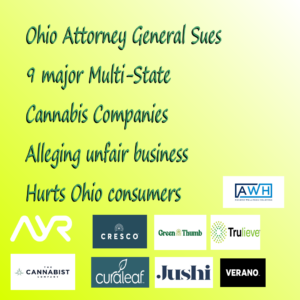
The modern business of sin is looking like the old mobster movies again, just without all the violence in the streets. They still extort from business owners, put undue pressure with no relief, the threat of arrest and asset forfeiture. Deals are not done in backrooms but golf courses, or with money being donated to certain “interests.” This is not to say all deals in the legal space are done this way. Headlines in the news and social media will lead you to believe otherwise. There are lots of legal companies out there doing the right thing and following the law. To highlight a recent case being presented in Ohio, the Ohio Attorney General is charging some of the major cannabis companies like Green Thumb Industries with unfair business practices and “cartel like” activities. On the flip side the state of Missouri may have to issue extra cannabis licenses to a few of the lottery participants for the results of the initial lottery being skewed. A review of the process found that it was not as random as the lottery lead participants to believe. Participants could pick their “nickname” to use to make themselves anonymous amongst the other entries. It was not. Some companies used names close to their parent company name or their own legal names.
What will the future bring for the business of “Sin” in the next coming months. It is hard to tell in this political storm going on right now. Cannabis was moved to Schedule III after years and years of advocacy for it being re/de-scheduled.